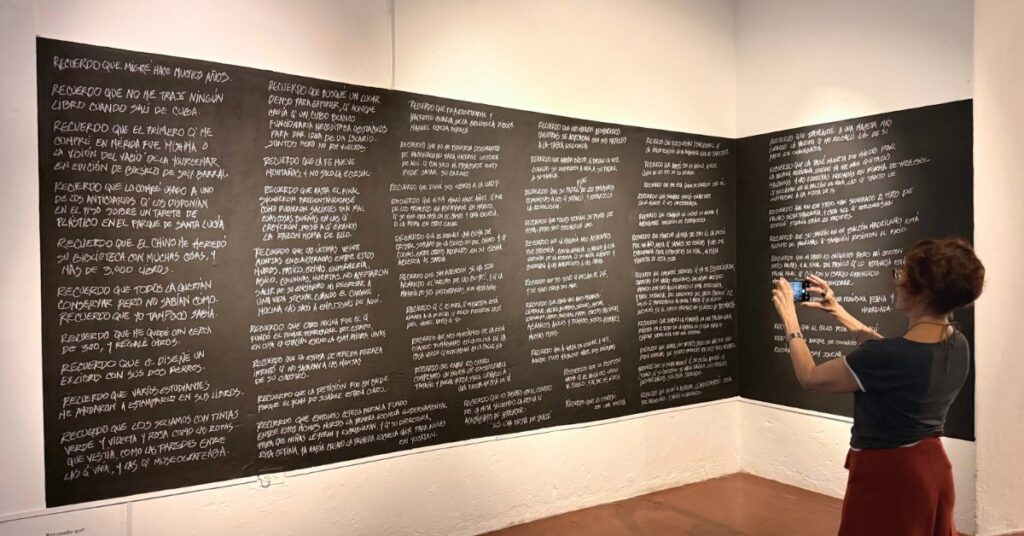

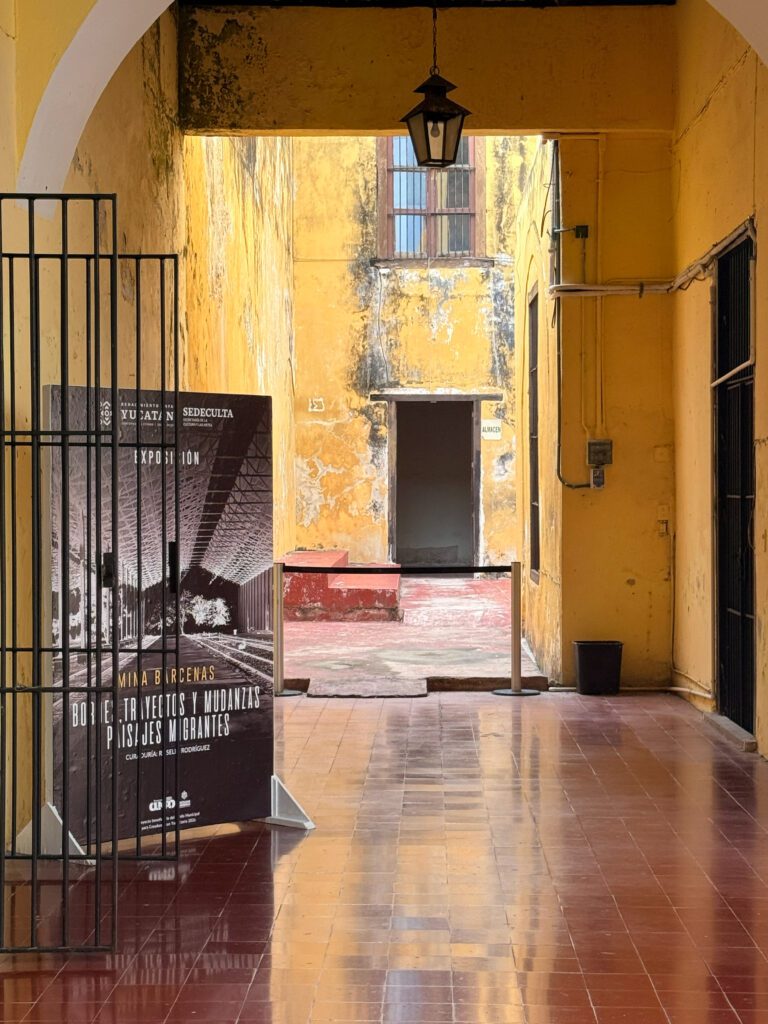
There are exhibitions you appreciate intellectually, and then there are those that touch something much more personal. Bordes, trayectos y mudanzas. Paisajes migrantes, the photography exhibition by Cuban artist Mina Bárcenas at the Centro Contemporáneo del Mayab (CCM), did both for me.
I visited the exhibition last week, and it is absolutely worth stopping by before it closes on October 24.
Perhaps it affected me so strongly because I have family in Cuba and have lived in Mérida for many years. I understand something of that strange emotional space between places: the affection and nostalgia you can feel for somewhere that shaped you, while at the same time developing a deep attachment to another place that slowly becomes home.
That tension—between leaving, remembering, arriving and belonging—is at the center of Bárcenas’ work.
A Cuban Photographer Looking at Mérida Through the Experience of Migration
Mina Bárcenas migrated from Havana to Mérida 35 years ago, and her work explores what happens to our relationship with place after migration.
The curatorial text by Roselin Rodríguez Espinosa describes displacement not simply as moving geographically, but as a rupture in the linearity of time. When we migrate, memories, images and sensations from different periods begin to overlap. Something in a new city suddenly reminds us of somewhere we left behind. A landscape, a sound or a particular quality of light can unexpectedly connect two worlds.
That idea becomes very tangible as you move through the exhibition.
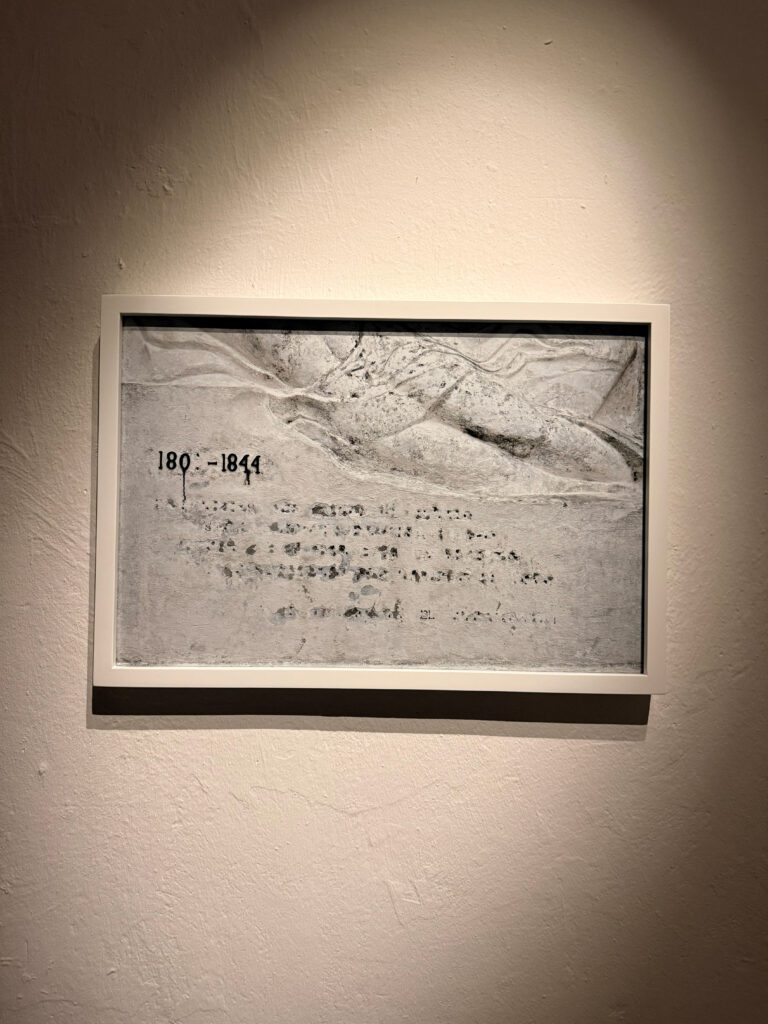
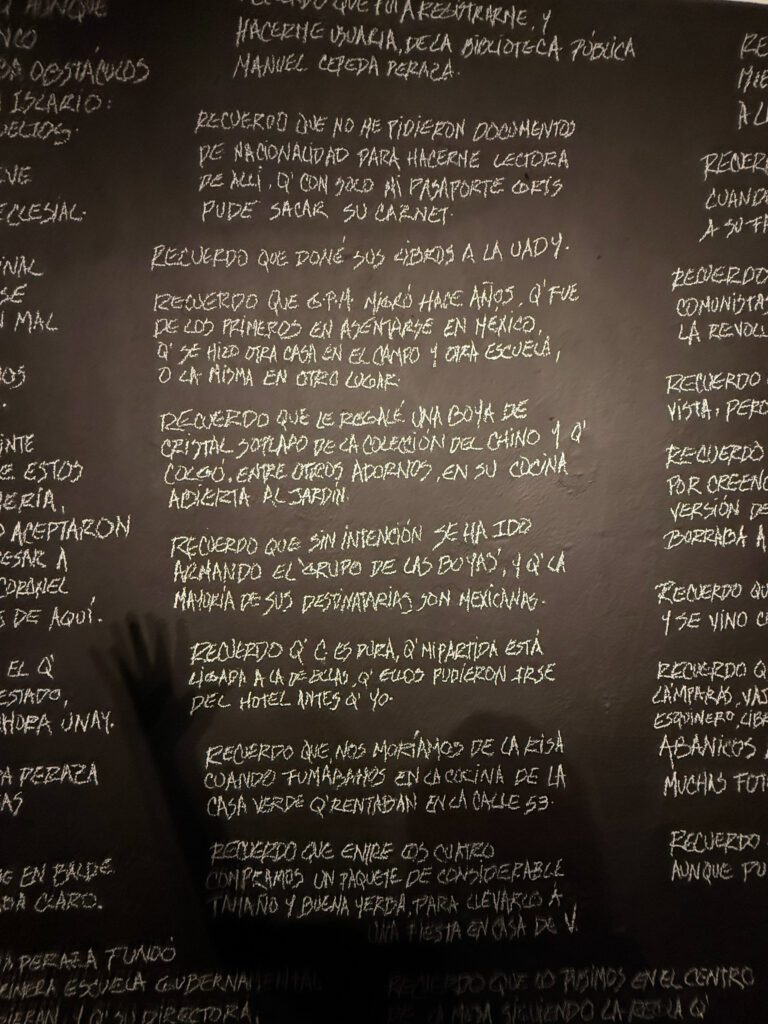
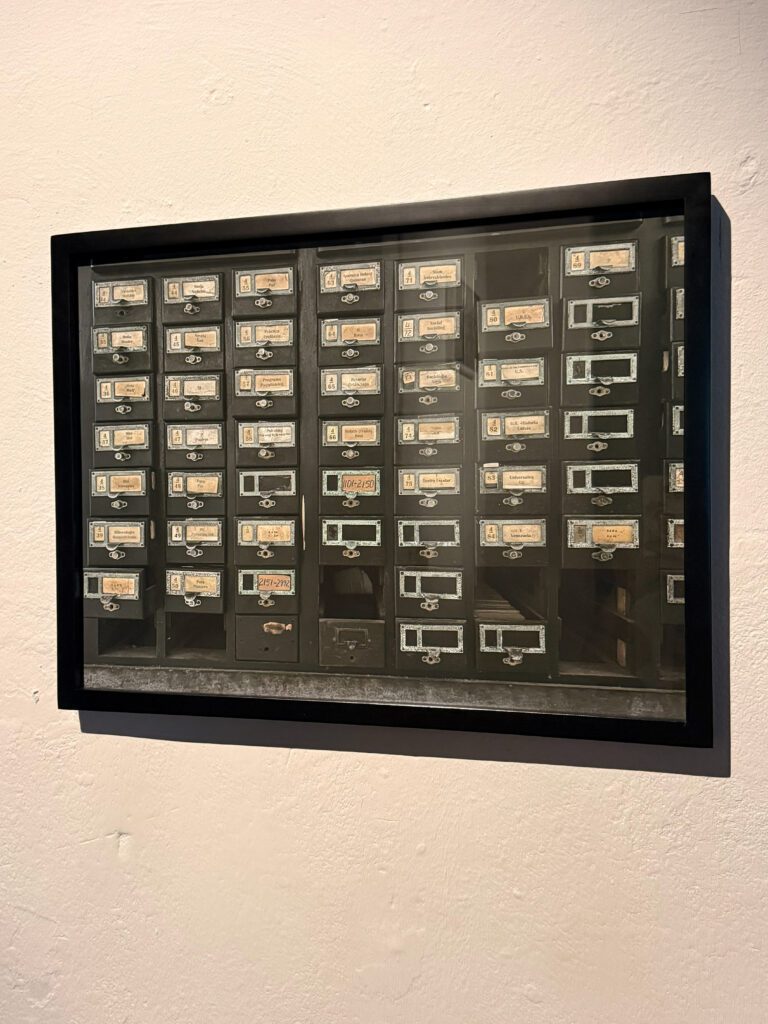
Bárcenas doesn’t present photography in one conventional format. Her images appear in different forms, archives and devices, and the exhibition incorporates moving images as well. There is a physicality to the presentation that makes you look more closely and think about photography itself as an object of memory—not simply an image.
Havana: Remembering Places Through the Senses
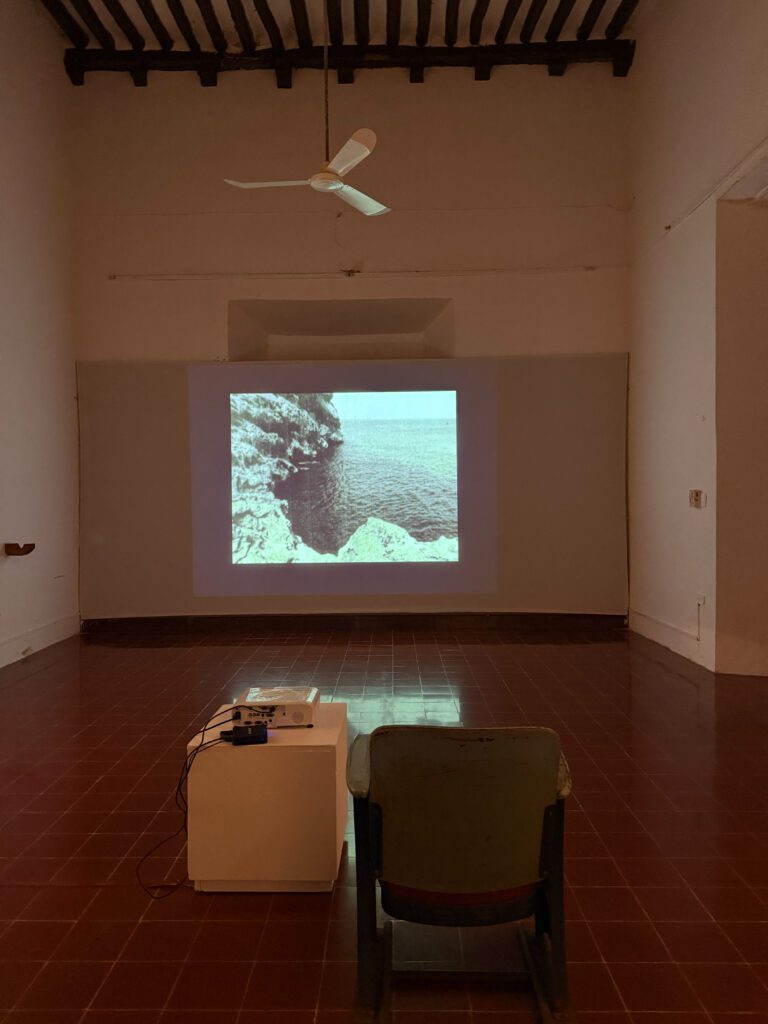
Two short films shot on 16mm are among the pieces that stayed with me.
One returns to familiar and beloved places in Havana. What struck me was how easily these images evoke memories beyond what we can actually see.
When we think about home, we don’t remember it only visually.
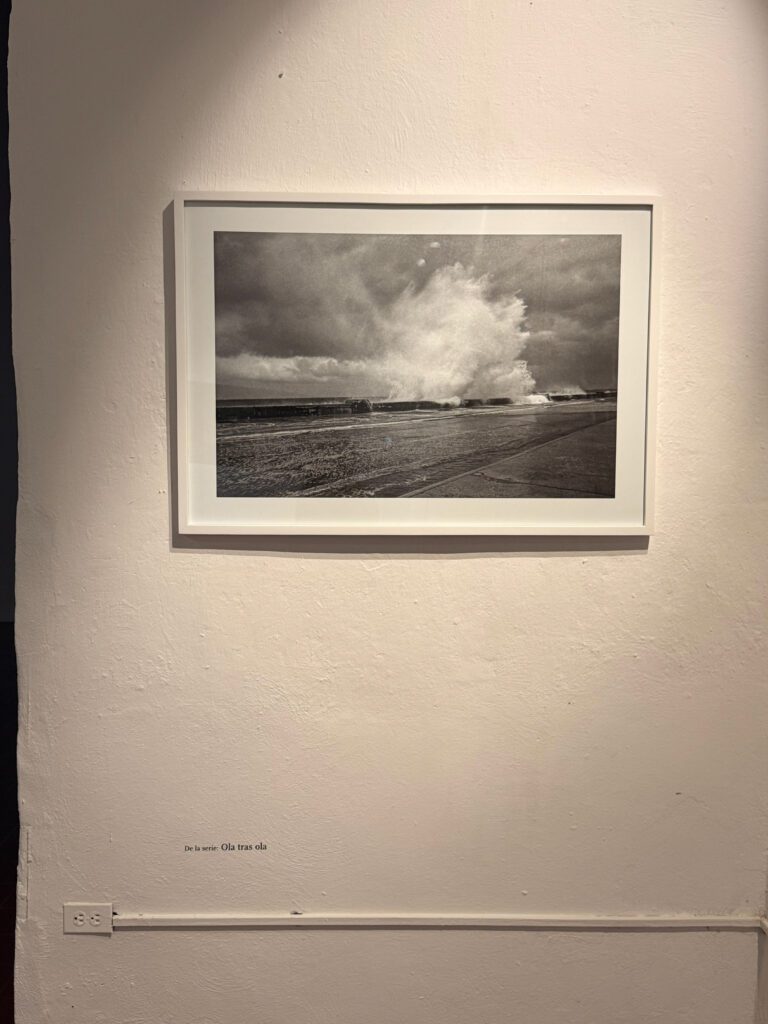
We remember walking through a park and hearing the wind moving through the leaves. We remember the feeling of humidity on our skin. We remember standing beside Havana’s Malecón, watching and feeling the waves crash against the seawall and smelling the salt in the air.
Those sensory memories can remain with us for decades.
The exhibition made me think about how migrants carry these fragments with them. A person may leave a city, but the city doesn’t necessarily leave the person.
Remembering “El Chino”
Another 16mm film is dedicated to José Luis Rodríguez de Armas, “El Chino,” also Cuban and an important cultural figure in Mérida.
Rather than approaching his memory through a traditional portrait, Bárcenas takes us into his home after his death.
We see this extraordinarily artistic personal space after the person who created and inhabited it is no longer there. His belongings, rooms and objects become a different kind of portrait.
I found this especially moving.
Homes tell stories about us. The books we keep, the objects we collect, the art we hang and the way we arrange a room become traces of a life. Photographing these spaces after someone has gone creates another form of memory—one in which absence itself becomes visible.
Nos Llevará el Tren and a Mérida That Has Already Changed
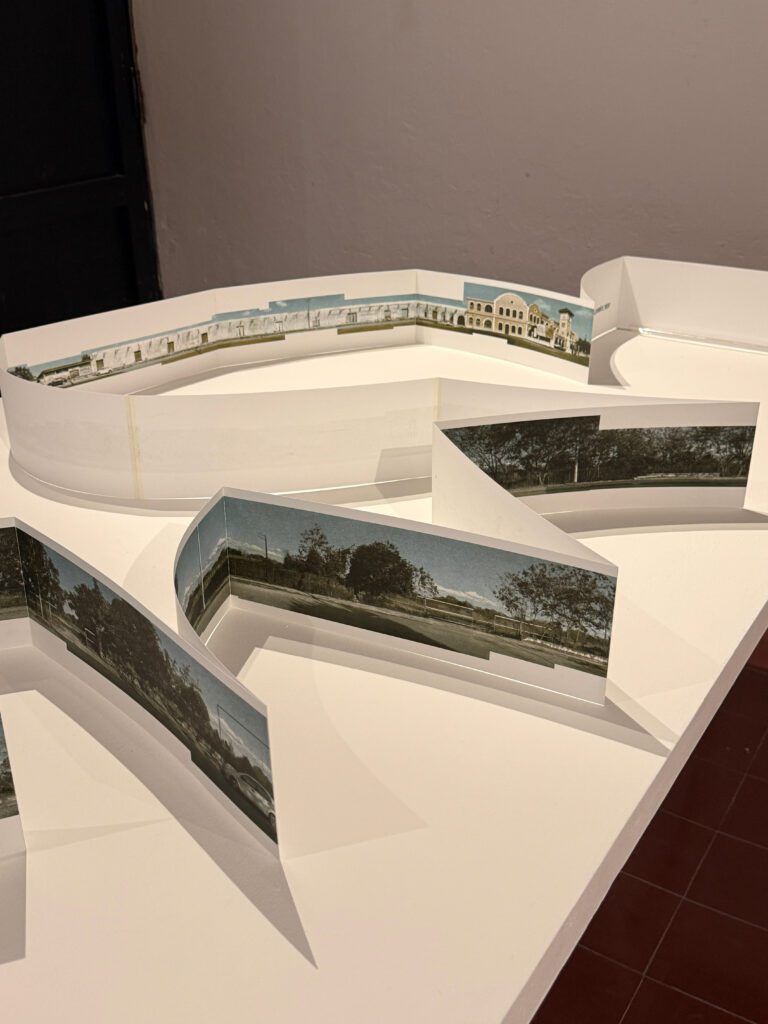
One of the most fascinating pieces for anyone who has lived in Mérida for a while is Bárcenas’ book Nos Llevará el Tren.
Here she photographed La Plancha before the construction of the Gran Parque La Plancha, capturing a landscape that has now largely disappeared.
Before today’s park, this enormous piece of land was mostly an abandoned railway yard filled with old train cars. At the other end was the arts school, ESAY. It was a completely different urban landscape from what visitors encounter today.
Looking at these photographs is particularly interesting because the transformation is so recent. Many of us still remember that version of La Plancha, yet it already belongs to the city’s visual history.
And this is where Bárcenas’ exploration of migration becomes broader than the experience of moving from Cuba to Mexico.
Places migrate too.
Cities change. Buildings disappear. Neighborhoods transform. Familiar landscapes become unfamiliar. Sometimes we can experience a form of displacement without ever physically leaving.
The Places We Leave and the Places We Learn to Love
What I loved most about Bordes, trayectos y mudanzas is that I didn’t experience it as an exhibition simply about loss.
There is nostalgia here, certainly, but there is also curiosity.
There is the old home—the streets, sea, architecture, people and sensory memories that remain embedded within us. But there is also the experience of discovering a new territory.
You begin walking different streets. You notice different trees. The air smells different. The light changes. You encounter new buildings, sounds and landscapes.
And eventually some of those things become familiar too.
A place that was once foreign becomes the place where you have memories.
Rodríguez Espinosa’s curatorial text includes a particularly beautiful idea from Bárcenas: “Siempre hacemos la misma casa, cuando podemos.” We keep making the same home, when we can.
That thought stayed with me after leaving the exhibition.
Perhaps migration is not a clean departure from one place followed by arrival in another. We carry pieces of previous homes forward and, consciously or unconsciously, use them to understand the next one.
After many years, the boundaries become less distinct. Havana can exist in Mérida. Mérida can become home without erasing Havana.
For me, with family in Cuba and many years of my own life now rooted in Mérida, that part of the exhibition hit home.
If you’re interested in photography, contemporary art, Cuba, Mérida or simply the complicated idea of home, I recommend going by to see it.
Fast Facts
Exhibition: Bordes, trayectos y mudanzas. Paisajes migrantes
Artist: Mina Bárcenas
Curatorial text: Roselin Rodríguez Espinosa
Where: CCM — Centro Contemporáneo del Mayab
Dates: September 18–October 24, 2026
Hours: 11 AM–6 PM
Guided visits: Available with Mina Bárcenas by prior appointment
Instagram: @mina.barcenas
MID CityBeat tip: If you have time, arrange a guided visit with Mina. An exhibition built around personal memory and migration takes on another dimension when you can hear directly from the artist about the places, people and moments behind the images. She can do visits in both Spanish and English.