
A new chapter for Mérida’s art scene
There’s a real buzz building around Mérida’s art scene, and with the upcoming Bienal de Yucatán, galleries, artists and collectors are preparing for what promises to be a particularly exciting cultural season. The city’s historic mansions, independent galleries and contemporary art spaces are increasingly becoming places to discover work by both established international artists and emerging Mexican talent.
The inaugural Bienal de Yucatán takes place from November 26, 2026, through February 28, 2027. Titled VOCAL and directed artistically by Abraham Cruzvillegas, it will bring together 76 artists across 16 venues in Mérida and Maní, exploring language, communication and artistic expression through exhibitions, installations, performances and public programming. The Bienal will be free to attend, opening up an extraordinary opportunity for residents and visitors to engage with contemporary art.
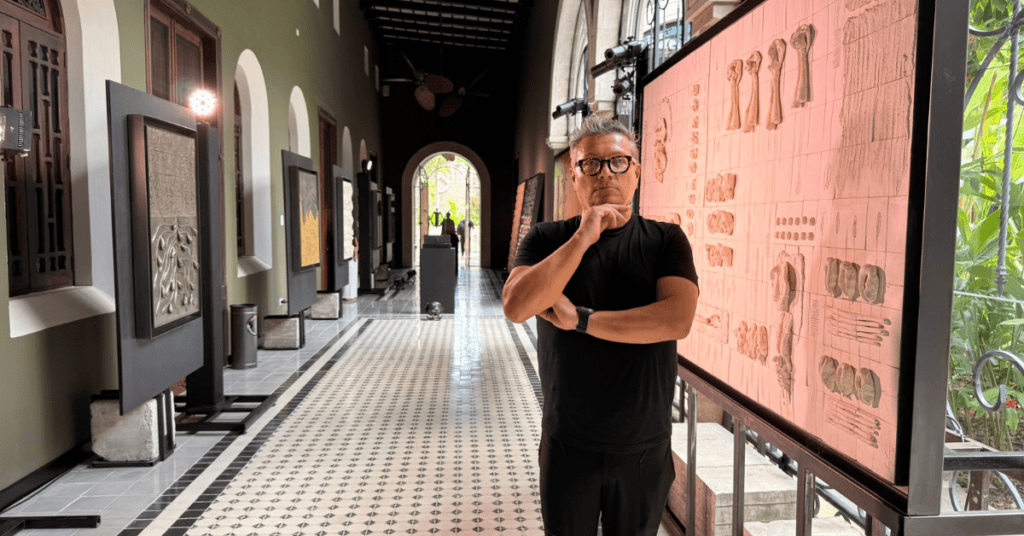
And while we’re eagerly awaiting its arrival, Mérida’s galleries are already giving us plenty to talk about. One exhibition that deserves particular attention is Dioses ajenos (Foreign Gods), the first presentation in Mérida by internationally recognized Mexican sculptor Rivelino, brought to the city by Galería Urbana in collaboration with Mansión Xodó.
This is a fascinating opportunity to explore more than two decades of the artist’s work, with selected sculptures created between 2003 and 2026. Rather than presenting a traditional chronological retrospective, the exhibition brings together pieces from different periods of his career, allowing visitors to discover the recurring ideas, forms and materials that have shaped his artistic practice.
And the setting is equally interesting. Presented inside Mansión Xodó, a restored historic residence that has recently opened as an exclusive vacation property, the exhibition creates a dialogue between contemporary sculpture and Mérida’s architectural heritage. It’s precisely the kind of encounter that makes the city’s evolving art scene so interesting: an internationally recognized artist, an ambitious local gallery and an extraordinary historic property coming together to create an experience that extends well beyond the traditional gallery setting.


An artist whose work asks difficult questions
Rivelino has spent decades exploring the human figure, silence, memory and our relationship with the objects and symbols we create. His sculptures often begin with recognizable forms—a human head, a hand, a fragmented body—but gradually reveal more complicated questions about identity, communication and the human experience.
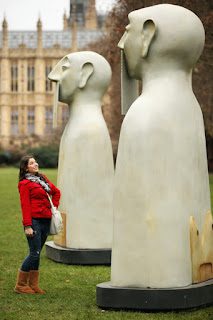
His internationally recognized installation Nuestros silencios (Our Silences), for example, features monumental bronze busts with their mouths covered. The work has traveled internationally, inviting viewers to consider freedom of expression, censorship and the many forms that silence can take. His monumental sculpture Tú, featuring two enormous index fingers pointing toward one another, similarly explores the relationship between individuals, identity and the way we perceive others.
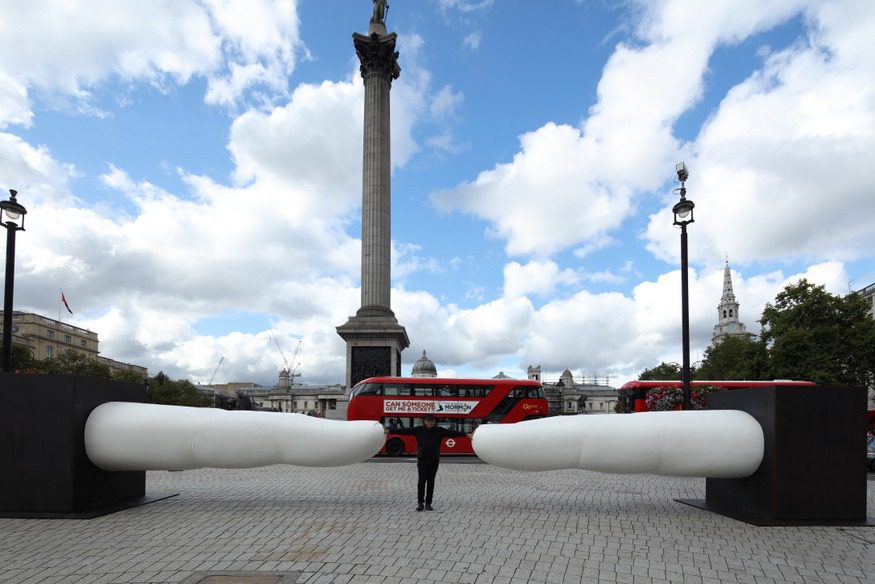
Picture 1: “Tú/You”, Photo from https://londonist.com/2015/09/giant-pointing-fingers-in-trafalgar-square
Picture 2: “Nuestros Silencios/our Silences”, Photo from https://walktofreeartlondon.blogspot.com/2015/10/371-you-by-rivelino.html?m=1
What makes his work so compelling is that these ideas are communicated through physical forms rather than lengthy explanations. The sculptures have an immediate visual presence, but their meaning becomes increasingly layered the longer you spend with them.
Dioses ajenos: An artistic journey from 2003 to 2026
For this first encounter with the Yucatán public, Estudio Rivelino has opened part of its private collection, bringing together sculptures and reliefs spanning more than twenty years. The exhibition includes Monolitos intemporales from 2003, early ceramic works, pieces associated with Nuestros silencios, a smaller version of You and HERE, a work created in 2016 that was subsequently incorporated into Topografía de lo invisible, presented in 2025.
The exhibition culminates with new works from the Dioses ajenos series, created in 2026. Seeing these different periods together reveals how Rivelino has continued to explore certain questions throughout his career, even as his techniques, materials and artistic vocabulary have evolved.
His use of materials is particularly interesting. Ceramic, steel, bronze, concrete, incinerated wood and gold all appear throughout his work, introducing different qualities of permanence, fragility, transformation and memory. Yet despite the variations in scale and material, recurring forms and symbols connect pieces created decades apart.
The exhibition’s title introduces another dimension to this exploration. Throughout history, human beings have created gods, guardians, amulets and sacred objects to represent what we cannot fully understand or control. Rivelino returns repeatedly to this instinct, creating fragmented bodies, enigmatic forms and objects that seem to belong to an archaeological collection from an imagined civilization.
These are works that encourage visitors to look closely, reconsider their first impressions and discover connections between pieces that initially appear very different.
Mansión Xodó: Contemporary art meets historic architecture
Mansión Xodó provides an interesting architectural setting for Dioses ajenos. The restored 19th-century residence has recently been transformed into an exclusive vacation property, preserving elements of its historic character while incorporating contemporary design, art and hospitality.
Its generous proportions, original architectural details and carefully considered interiors create an atmosphere quite different from that of a conventional white-walled gallery. Presenting Rivelino’s sculptures in this environment adds another layer to the exhibition, particularly given the artist’s ongoing interest in memory, material and the passage of time.
It’s also a wonderful example of the way Mérida’s historic properties are finding new lives as cultural and hospitality spaces. Rather than separating the city’s architectural past from its contemporary creative scene, projects like Mansión Xodó bring the two together.
How to visit Dioses ajenos
The exhibition is available by appointment only, and Galería Urbana is also arranging small group tours. Visitors interested in seeing the show can contact the gallery through its social media channels to schedule a private visit or ask about joining an upcoming tour.
📍 Mansión Xodó, Mérida Centro
🎟️ By appointment only. Message Galería Urbana on social media to arrange a visit or ask about joining one of their small guided tours.
Mansion Xodó
We particularly recommend asking about the guided visits, as they offer an opportunity to learn more about the different periods of Rivelino’s work, the materials he uses and the ideas connecting the sculptures.
With the Bienal de Yucatán approaching and more exhibitions appearing across the city, this is a particularly rewarding time to explore Mérida’s contemporary art scene. Dioses ajenos offers an opportunity to encounter the work of an important Mexican sculptor while discovering another of the city’s remarkable restored residences.